New Year in the Japanese way
Japanese New Year is usually not about partying until dawn, fireworks and champagne. Rather, it’s about the opposite: retreating to home, osechi (お節) family dinner, watching the all-night TV show Kohaku utagassen (紅白歌合戦), and visiting shrines and temples on New Year’s Day, the hatsumode (初詣). This year, I was lucky enough to celebrate New Year the traditional way, and visit the famous Kifune Shrine in the Northern mountains of Kyoto. This gave an opportunity to immerse into the Japanese New Year customs and spirit.

At Kyoto’s Shijo station we transferred to the Karasuma subway line, and at Kokusaikaikan station we caught a bus that took us all the way to Kifuneguchi, the lower entrance to Kifune Shrine. As we ascended North from downtown Kyoto, the first traces of snow appeared, and at Kifuneguchi station we were greeted by a light snowfall. From there, it was a 30-minute walk (or 10-minute bus ride) to the actual entrance of the Shrine. We made our way up in the forest while admiring the snowfall, engulfing the world in a white blanket.

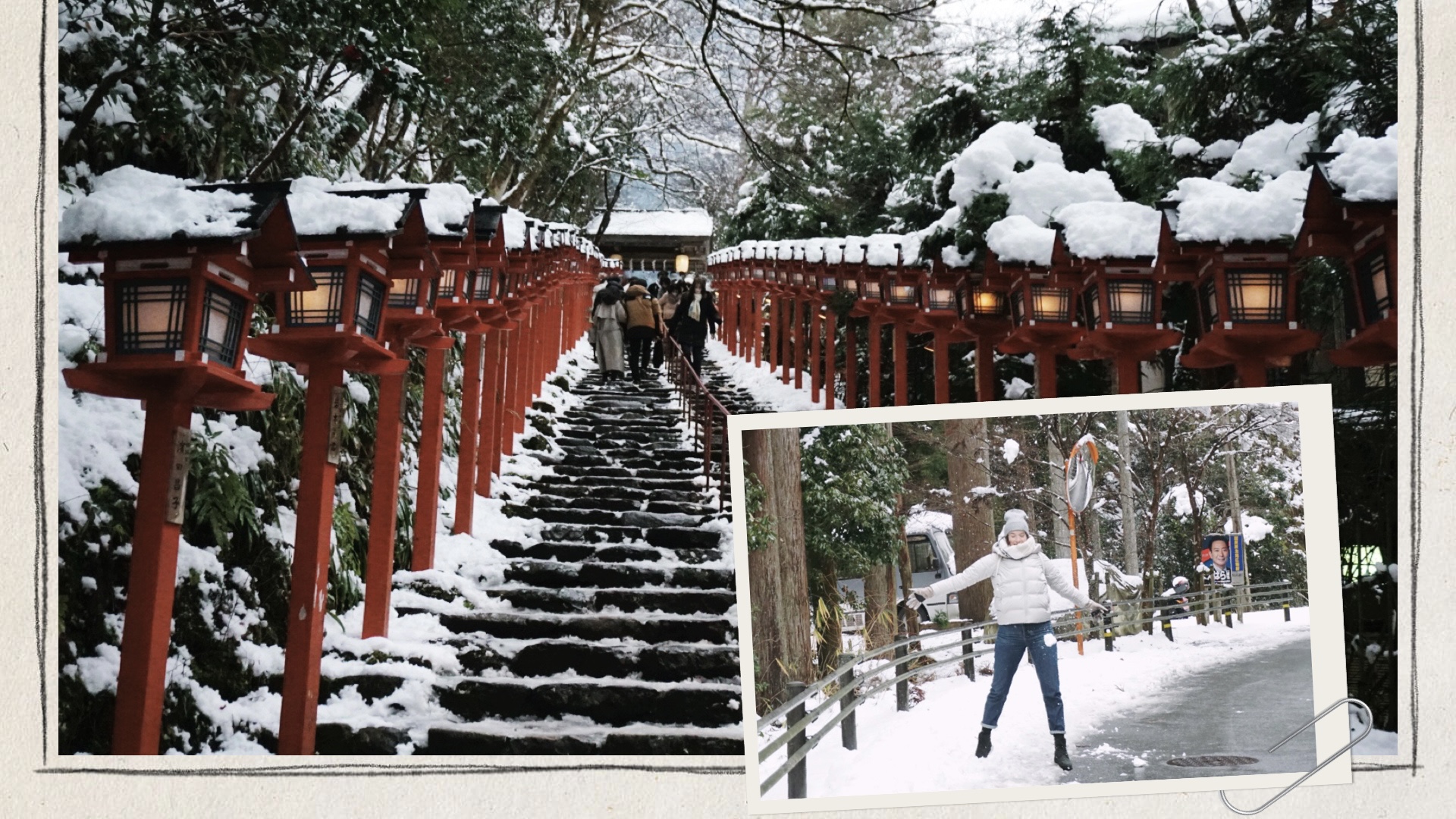
The Kifune Shrine (貴船神社) is perhaps the most beautiful when blanketed in snow, and we were lucky to be just in time. According to Japanese New Year traditions, we were greeted at the shrine gate by kadomatsu (門松), a bouquet of (pine) branches, typically placed on both sides of the entrance on New Year. From the red torii gate signifying the entrance to the shrine leads a series of long, steep stairway, lined with red lanterns. Arriving on top of the stairs, a serpentine queue welcomed us for the first worship of the year.

Kifune is a Shinto shrine worshipping the water deity (神, kami). It consists of three separate shrine sections: the Main Shrine (本宮), the Middle Shrine, Yui no Yashiro (結社), and the Inner Shrine, Okunomiya (奥宮). Some pilgrims choose a particular route to make their visit. They first attend the Main Shrine, then after offering their prayers, they walk directly to Okunomiya, and lastly on their way home, they stop by the middle shrine, Yui no Yashiro.

The Kifune Shrine was under the patronage of the Imperial Court during the Heian period, and at this time, official delegations from the Emperor’s court would arrive at the shrine carrying horses offered to the deities. The horses were sacrificed to pray for a specific kind of weather: a black horse was donated if rain was called for, and a white horse if clear skies were called for. To this day, statues of horses still standing in the sanctuary bear witness to this.

We also paid our respects at the sanctuary, and in exchange for 200 yen, we drew the first omikuji (おみくじ), or lucky slip, of the year. Since the theme of the shrine is water, the reading is drawn by dipping the paper slip into the stream water trickling down the hillside. For me, the word daikichi (大吉, great fortune) appeared, and I immediately felt very lucky, as one of my long-awaited bucket list points was fulfilled by visiting the snow-covered Kifune Shrine.

At the edge of the shrine, grilled mochi (餅) was on sale, and a bonfire lit by local monks crackling, to keep the visitors warm. As is customary at shrines, there was plenty of omiyage (お土産), souvenirs for sale: my favorite was the white momiji ema (紅葉絵馬), a maple leaf shaped wooden board, decorated with gleaming silver snowflakes, on which wishes can be inscribed and hung up around the shrine. We ate our mochi in the shelter hut, and carefully made our way down the lantern-lit staircase, following the thousand-year trail of pilgrims and tourists.

More on the history of the Kifune shrine: https://www.discoverkyoto.com/places-go/kifune-shrine/
Kifune Shrine official webpage: https://kifunejinja.jp/en/info/
Vélemény, hozzászólás?